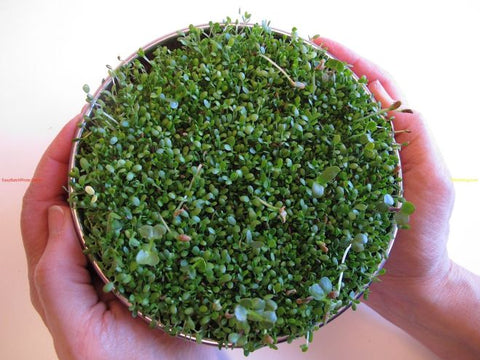
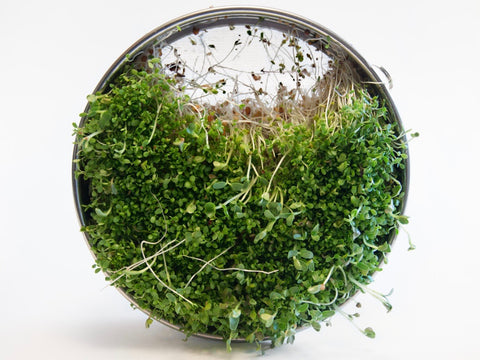
Yields approximately 3/4 Cup (1/3 lb.) of Sprouts
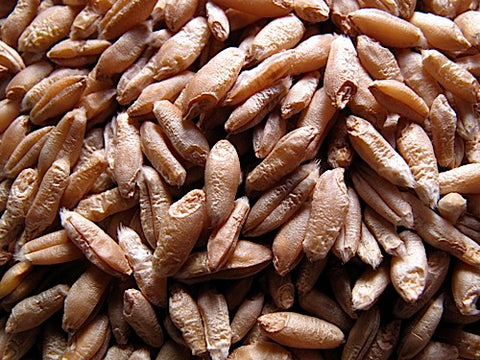
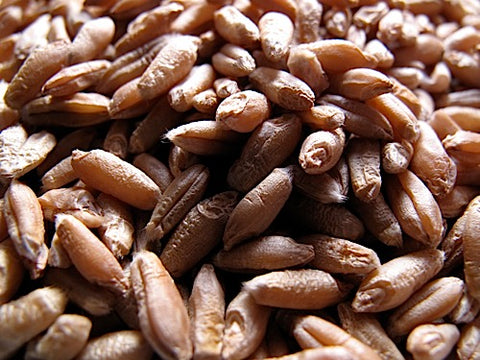
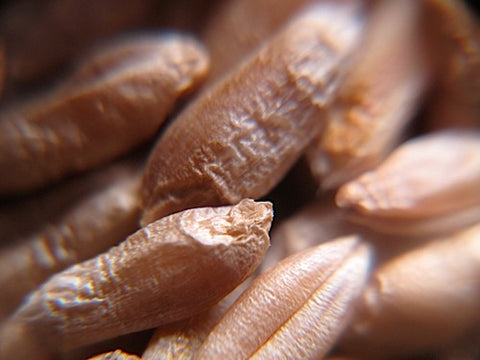
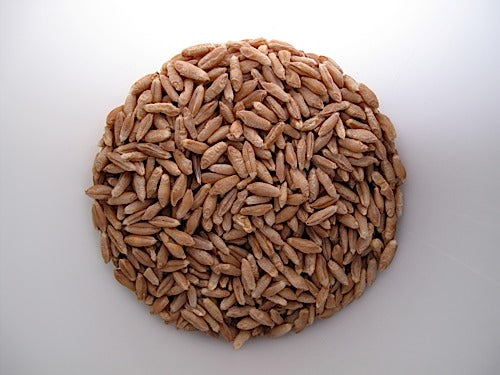
Measure out 1/2 Cup of seed*
Rinse your seeds to remove dust and plant debris.
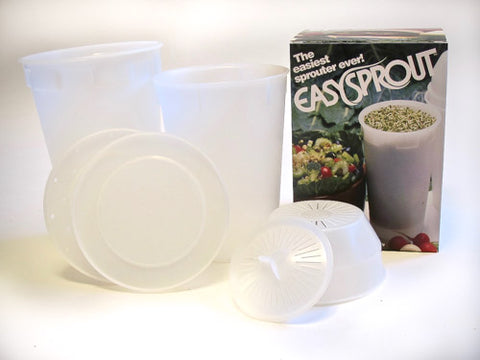
Transfer your seeds - if necessary - into your Sprouter, or a bowl.
Add 2-3 times as much cool (70-80°F) water.
Mix seeds up to assure even water contact for all.
Allow seeds to Soak for 6-12 hours.
Do Not Ever Soak Again. Soaking is done only this one time.
We start counting days at this point - when the Soak is done (post-Soak is the phrase we use).
A crop of Grain Sprouts usually takes 1-2 days - from This point in time to harvest.
Sprouting
Empty the seeds into your Sprouter (if necessary).
Drain off the soak water.
You can use it - it has nutrients in it. We use it on house plants.
Rinse thoroughly with cool (70-80°) water.
Drain thoroughly.
Set your Sprouter anywhere out of direct sunlight and at room temperature (70° is optimal) between Rinse/Drain cycles.
This is where your sprouts do their growing. We use a counter top - in the corner of our kitchen, near the sink.
Indirect sunlight is fine, as is your regular room light - because light just does not matter much here.
Your Grain Sprouts will never have blades (the grass version of leaves =;-), and a plant can only perform photosynthesis when it has leaves/blades. Until then light has little if any effect, so don't hide your sprouts - because they like air-circulation.
Rinse and Drain every 8-12 hours for 1-3 days.
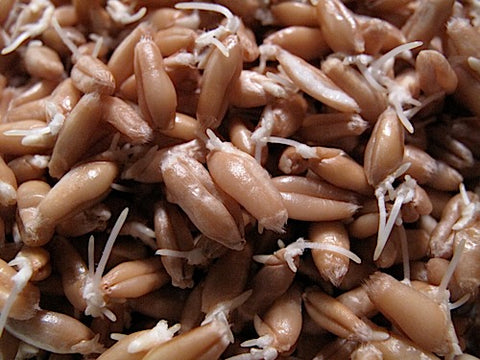
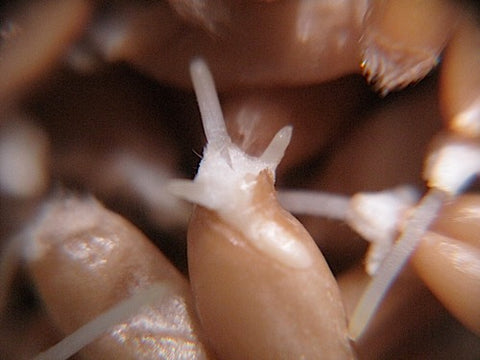
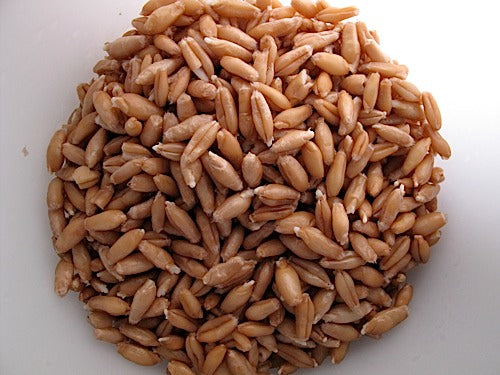
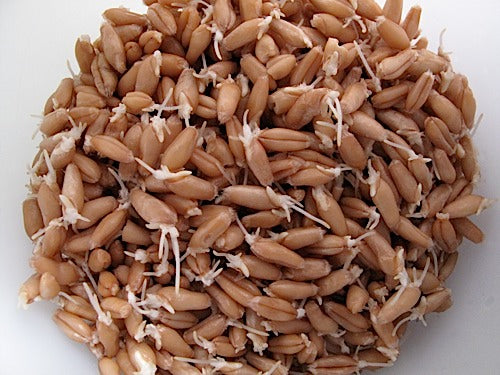
We prefer our Grain Sprouts short, so we stop when their roots are about ¼ inch long.
Typically we do 2-4 Rinse/Drain cycles, for all Grains.
Depending on your climate and the time of year you are sprouting and most importantly your personal preference - You may Rinse and Drain again at 8-12 hour intervals for several days.
We Do Not recommend doing so, unless you're doing a science experiment. Grow them for as long as you like - as long as you continue to Rinse and Drain every 8-12 hours.
If you grow for a week you'll get some Grass growing, as well as roots. Experiment! Have Fun! It's All Good - if occasionally inedible @;-D
When we were new - in 1993 - we'd Soak all of our seeds 6 days before our next farmers market day. That was perfect for Leafy Sprouts, but Grain Sprouts grown for that long - because we grew everything in Trays - ended up as a solid mass of sprouts - with roots that were so prolific that we had to use a knife to cut any out. What we served our earliest Grain Sprout customers was like a brownie - except it was solely Grain Sprouts - so, much more dense - and with short Grass growing on top.
As always, we suggest that you taste your crop at EVERY Rinse - including the very first - just after the Soak period. The soaked seeds are already alive and super nutritious - and so they'll nourish you.
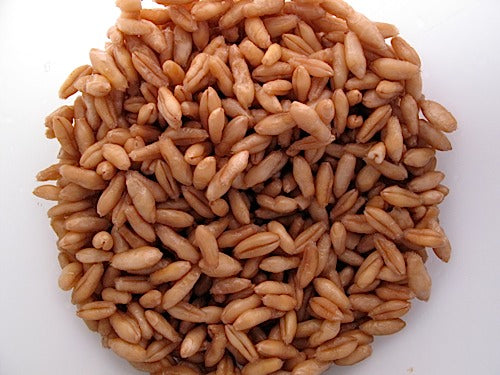
The transformation - from dormant (dry) seeds to living (engorged) sprouts, and the nutritional gain, just from Soaking - is the greatest gain of all. Though further nutrients develop as the crop grows - the gain is minimal by comparison. They are also (now that they've soaked up their fill of water), without enzyme inhibitors (a very good thing indeed!), so they'll digest themselves - without requiring your body to use any of its own enzymes.
So taste them often and find out for yourself when they are most delicious.
That is when they're really done!
Harvest
Your sprouts are done 8-12 hours after your final Rinse.
Be sure to Drain them as thoroughly as possible after that final Rinse.
The goal during the final 8-12 hours (after that final Rinse/Drain) is to minimize the surface moisture of your sprouts. They will store best in your refrigerator if they are dry to the touch.
Transfer your crop of delicious sprouts to a plastic bag or the sealed container of your choice - and put them in your refrigerator. We offer Produce Storage Bags that will extend shelf life substantially.
Grain Sprouts are best eaten within a week of harvest - but they can last for weeks in the fridge - though they will keep growing (at a slower rate), and so will eventually produce Grass.
*Amount of Seed to Use
* If using Sproutpeople's Single Harvest Pack - use the whole bag. It will produce a crop of approximately 8 ounces.
These seeds yield approximately 1.5:1 - so in theory you can start with up to as 2/3 as much dry seed as your Sprouter has capacity.
If you are new to sprouting, or new to this crop; we advise that you start with 1/4 - 1/3 of your Sprouter's capacity so that your sprouts have more room. It's easier to Drain if you have room for your seeds/sprouts to move. Take it from me - I've been overfilling my Sprouters for decades =;-D