Coconut Coir Growing Medium
Coconut Coir (pronounced coy-er) is a growing medium that holds water amazingly well. It is inexpensive, organic, and feels absolutely WONDERFUL. It is a phenomenal medium for growing Grass, Greens, and Micro-Greens.
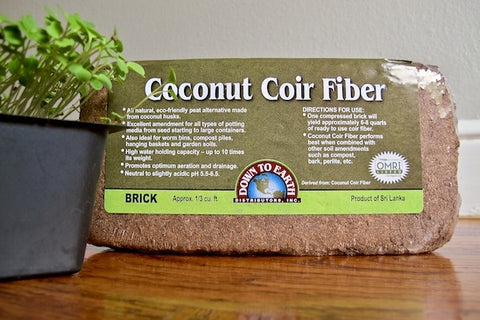
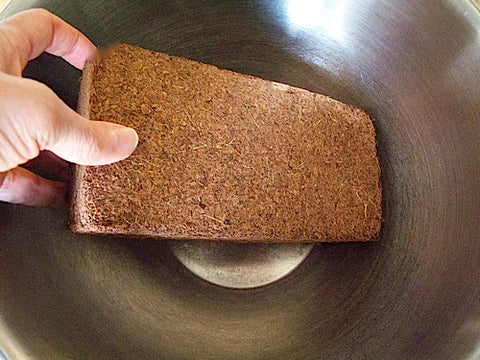
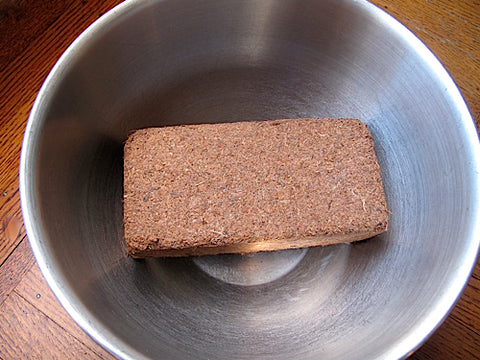
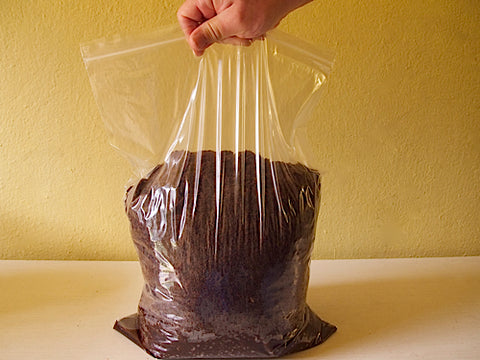
We sell Coconut Coir by the brick (almost identical in size to a building brick). Each brick makes 2 1/2 gallons (40 cups, or 20 Pints) of wonderful loamy material which can be stored indefinitely in a ziplock bag. This is AMAZING stuff! We are in love with Coir! LABEL MAY VARY FROM PHOTO.
Yields approximately 4 Cups (1/2 lb.) of Sprouts
Seed Prep
Measure out 2 Tablespoons of seed* (slightly heaping) into your Sprouter or a strainer.
Rinse your seeds to remove dust and debris.
Soak
Transfer your seeds into your Sprouter (if necessary), or to a bowl.
Mix seeds up as you slowly add water to assure even water contact for all.
Add 2-3 times as much cool (70-80°F) water.
Allow seeds to Soak for 4-12 hours.
Do Not Ever Soak Again. Soaking is done only this one time.
We start counting days at this point - when the Soak is done (post-Soak is the phrase we use).
A crop of Leafy Sprouts usually takes 6 days - from This point in time to harvest.
Sprouting
Empty the seeds into your Sprouter (if necessary).
Drain off the soak water.
You can use it - it has nutrients in it. We use it on house plants.
Rinse thoroughly with cool (70-80°F) water.
Drain thoroughly.
Draining Thoroughly (Maniacally even) is the key to great crops. The smaller the seed (all Leafy Sprouts are small seeds) the more thorough you must be. Do Not skimp on Rinsing - but focus seriously on Draining.
If you need to see what we mean by Thorough Draining - check out our videos.
Set your Sprouter anywhere out of direct sunlight and at room temperature (70° is optimal) between Rinses.
This is where your sprouts do their growing. We use a counter top - in the corner of our kitchen, where the sprouter won't get knocked over by cats, dogs, kids or us. Indirect sunlight is fine, as is your regular room light - because light just does not matter much in the first couple days.
A plant can only perform photosynthesis when it has leaves. Until a plant has leaves, light has little if any effect. Sprouts also happen to like air-circulation, so don't hide your sprouts. When leaves do appear, this will be plenty of light for them to green up. You can also use Grow Lights if you like.
Rinse and Drain again every 8-12 hours for 3 days.
Always be sure to Drain very thoroughly. The most common cause of inferior sprouts is inadequate drainage. Even the best designed Sprouting Device holds water, so pay special attention to this step.
Greening
On the 4th day (post soak) relocate your sprouts, if necessary.
If you've been keeping them away from light - move them. Avoid direct sun as it can cook your sprouts, unless you are growing in a Tray Sprouter - in which case direct sunlight is great. Indirect sunlight is best for non-tray Sprouters but grow lights work well too. Experiment - you will be amazed at how little light sprouts require to green up. Photosynthesis is a marvel!
Continue to Rinse and Drain thoroughly every 8-12 hours.
Your last Rinse and Drain will be either at the end of day 5 or the start of day 6.
Always Drain Thoroughly.
Finishing
Your sprouts will be done about the end of day 6.
The majority of sprouts will have open leaves which will be green. You'll recognize them.
De-Hulling
Hulls are the thin coat on a seed. In most cases they separate themselves from the sprout. They are only a problem when it comes to the shelf life of your finished crop. We've eaten them for years and consider them extra roughage, but the crop looks better and lasts longer without them - so removing them is good.
You may De-Hull your sprouts at any time during day 5 or 6.
If you have a Salad Spinner - De-Hulling can be your last step. You can harvest and refrigerate them immediately after you finish.
You can also remove hulls prior to harvest...
If you are growing in a Jar - using the Coarse Mesh Screen will allow some hulls to float out through the screen while Rinsing. Repeating and agitating your sprouts will allow more hulls to escape.
If you're growing in an Easy Sprout Sprouter - transfer your sprouts to the Solid Base, fill with water, and agitate with a fork. This will help hulls get to the surface - where you can skim them off. When you've gotten all you can - move your sprouts back to the Growing Vessel, Rinse again, and Drain Thoroughly.
If you're growing in our Stainless Steel Sprouter you can get rid of most of the hulls by Rinsing Upside Down. Instead of writing words - let us direct you to our short video on the subject: Rinsing Leafy Sprouts Upside Down
Here is our video on De-Hulling.
Harvest
If you De-hulled with a salad spinner - you can go right to refrigeration. If not... Your sprouts are done 8-12 hours after your final Rinse and Very Thorough Draining. If we minimize the surface moisture of our sprouts they store much better in refrigeration, so we let them sit for 8-12 hours after that final Maniacal Draining.
Storing Your Crop
Transfer your sprout crop to a plastic bag or the sealed container of your choice. We have Produce Storage Bags that can extend shelf life substantially.
Leafy Sprouts are best within a week of harvest, but we've had some crops last for over a month in the fridge.
Great work sprout farmer!
*Amount of Seed to Use
* If using Sproutpeople's Single Harvest Pack - use the whole bag (for a one-quart Sprouter). It will produce a crop of approximately 8 ounces.
These seeds yield approximately 7:1 - which means the sprouts will weigh 7 times as much as the seed you start with, but, they will increase even more in volume - so don't start with more than 2 (heaping) Tablespoons per quart/litre of sprouter capacity.
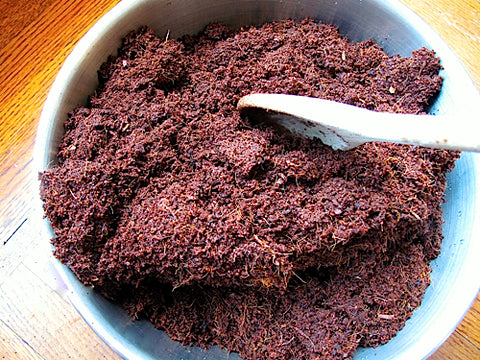
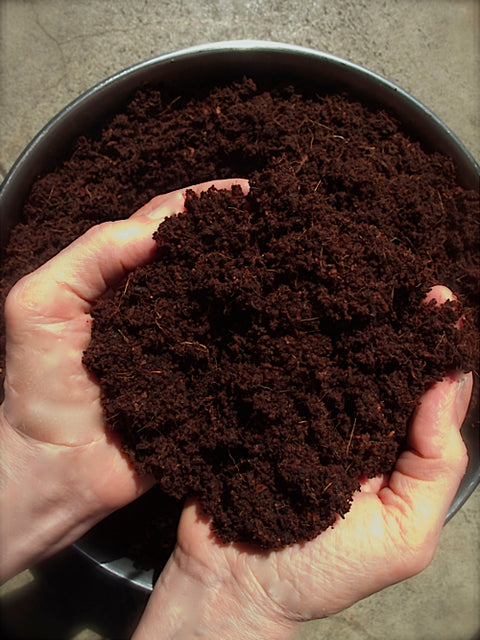
We are absolutely in love with this stuff! It is a most exceptional growing medium! Coconut Coir (coy-er) holds water phenomenally well and is wonderfully loamy, gorgeous stuff to work with. Coir is the fibrous material found between the hard, internal shell and the outer coat of a ripe coconut. Coir has been used in many ways for over a millennia. It is a 100% renewable resource which is odorless, lovely to handle, and uniform in composition. Coir stores unused minerals to be released to the plant as and when it requires it. It promotes strong root growth and plant vigor and has an ideal pH range of 6.0-6.8 - and it contains significant amounts of phosphorous and potassium. Perhaps best of all Coconut Coir is naturally high in compounds called lignins. This compound encourages the development of beneficial bacteria while discouraging harmful bacteria. You are going to love this stuff too!
Coconut Coir is an approved medium for organic crops. We like to add Earthworm Castings - 25% by volume for nitrogen, which makes Coir about as perfect as possible.
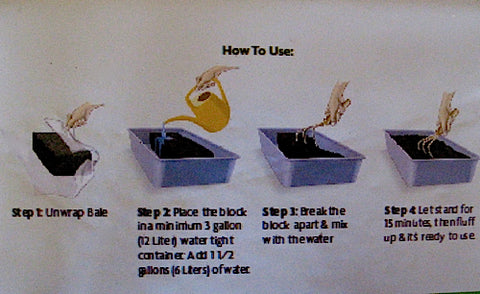
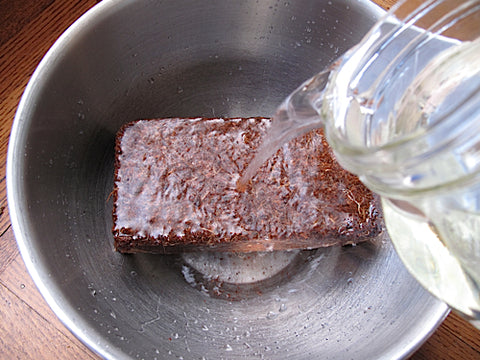
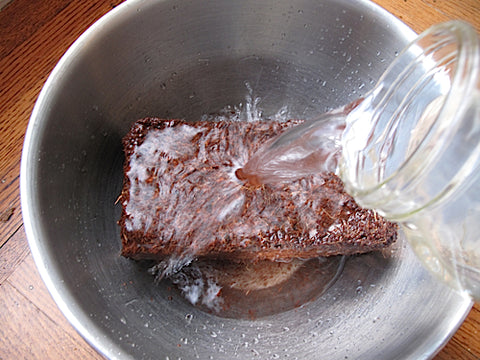
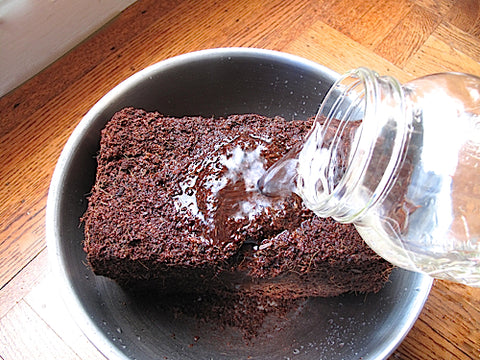
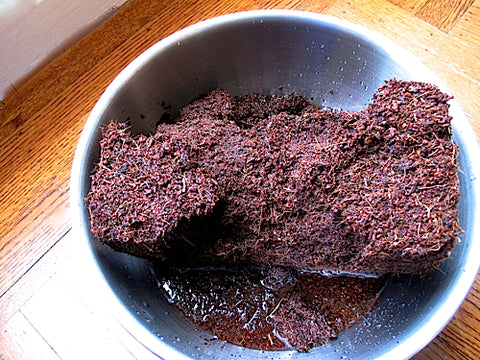
We sell Coconut Coir by the brick. Each brick is the size of a building brick (though they do vary in size they all weigh the same and so and produces 2 - 2.5 gallons of medium. All you do is add 1 gallon to 1.5 gallons of water and mix it up. It should be the consistency of wet soil medium so add ONE gallon of water first and slowly add up to another half gallon if it is too dry. You'll need a container that holds 3 gallons or more. Anything will do. We will also send you a large ziplock bag to store the moistened medium you don't use right away. We have stored it for 4 months with no issues. One brick of Coconut Coir makes as much as 40 cups! We use at least 12 cups (6 pints) for an 10 x 20 inch tray of grass, so each brick is enough for 3 full tray crops or 6 half-tray (10 x 10 inch) crops.
FOR USE WITH THESE SEEDS/CROPS
Grass, Greens, and Micro-Greens - and any other seed you want to grow into an edible plant.
Do not try to re-use Coconut Coir. Just compost it and start fresh with your next crop.
See this movie for more: Can I Re-Use My Growing Medium?
Thorough Instructions are given on the detailed pages we have for every seed and mix we offer.
My cats love SproutPeople Cat Grass made with their Coconut Coir Growing Medium. I make 3-4 containers of it every 8-10 days. These are placed near food and water inside. I also put older grass outside near water. And I make one big pot for the cats for them to eat outside on the covered lanai. Once mixed together and watered with distilled water, I cover pots with plastic bags for 5-6 days for the seeds to sprout.
great medium. a bit tough to peal off the brick if you are not using the whole brick
This coir brick makes a lot of soil. It’s the best. Thank you!
I finally successfully sprouted some beet micro greens after using the soil. My first attempt without a medium was a 50/50 of sprouted and unsprouted. This time I followed Gil's directions to the T and voila they grew! It's fun to watch it double in size once you add water!