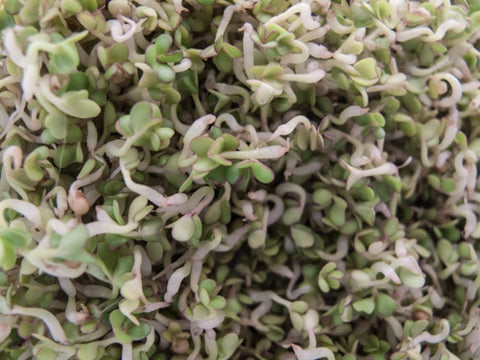
Mustard Sprouts
WE NO LONGER OFFER THIS SEED FOR SPROUTING AS IT IS TOO DIFFICULT FOR MOST PEOPLE TO GROW. IF YOU ARE DETERMINED TO TRY IT YOU CAN ORDER THE SEEDS (from our Mustard Greens page) AND FOLLOW THE INSTRUCTIONS ON THIS PAGE.
The spiciest Brassica of all, our Mustard is called Oriental Mustard. It tastes like horseradish to us!
Note: This is the same seed we sell for Mustard Micro-Greens.
Vitamins A, B, C, E and K
Calcium, Iron, Magnesium, Phosphorus, Potassium, Zinc
Carotene, Chlorophyll, Amino Acids, Trace Elements
Antioxidants
Protein: 30-35%
Tastes just like horseradish. Delicious!
The amount of Mustard Sprouts produced by 1 unit of Seed. For Example 2:1 means that 1 pound of Seed will produce 2 pounds of Sprouts or whatever crop you are growing. You do not have to grow them all at once of course, unless you wish to =:-D
The time it takes to grow a finished 3 - 6 days, or other crop (Micro-Greens, Grass, Greens) from a dry Seed. Note: This "finished" Sprout is our preference. you may grow them for as long as you want! In fact, we suggest that you taste them at every rinse to discover when you like them best.
How to Grow Mustard Sprouts
Soak 3 Tbs. of seed in cool water for 4-6 hours.
Drain off soak water. Do not ever soak again.
Rinse thoroughly.
Drain Thoroughly.
Rinse and Drain with cool water every 8-12 hours.
On day 3, move your Sprouter to indirect sunlight.
Continue to Rinse and Drain every 8-12 hours.
Harvest on day 5 or 6, when the leaves are open and most of them are green.
De-Hull your crop if you like, before Refrigerating.
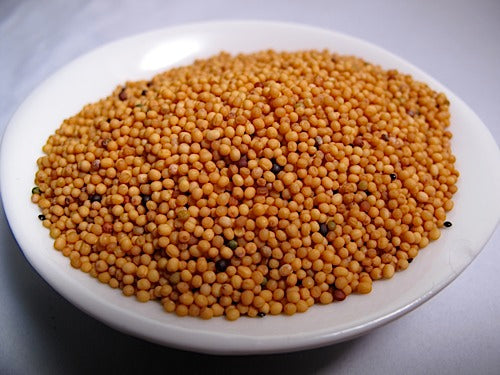
Oriental Mustard seed is one of very few non-mucilaginous mustard seeds. It is because it is not mucilaginous that it can be grown as a sprout. It can Also be grown as a Microgreen. A mucilaginous mustard seed Must be grown as a Microgreen. That's a big part of why Oriental Mustard is such a great seed - you have options =:-)
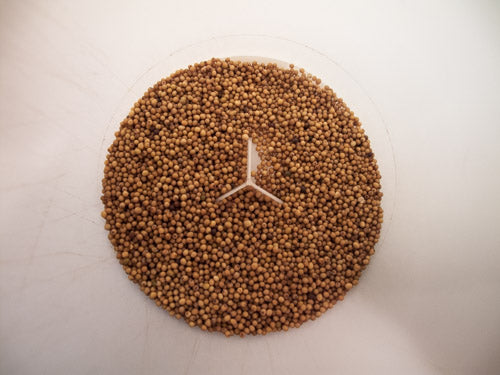
3 Tablespoons are now in one of our Easy Sprout Sprouters awaiting Soaking.
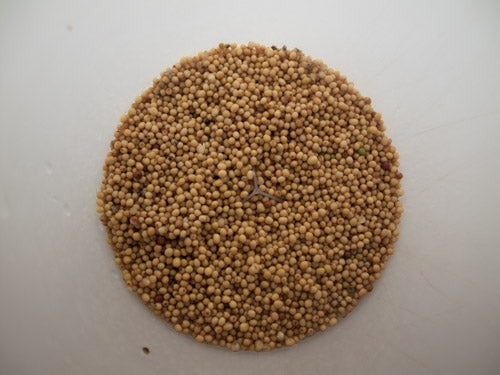
6-12 hours later (it really doesn't matter)...
Our Oriental Mustard has now Soaked up its fill of water. FYI - you are now working with living things. Once a seed has soaked up its fill of water it is alive. Having moved from its dry/dormant state you can actually eat them now and enjoy the nutritional benefits their life force offers. I suggest waiting. They are going to be even better in a few days. Now, Rinse and Drain very thoroughly.
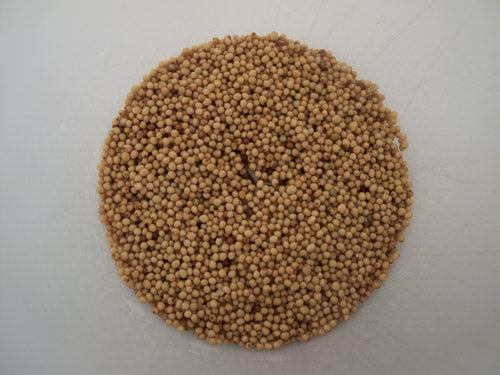
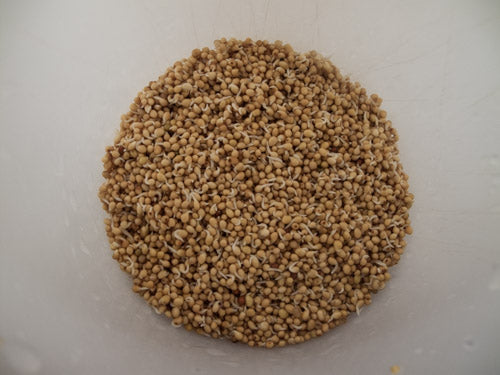
12 hours later...
By now you will be seeing plenty of germination and very likely root hairs which grow off the main (tap) root. They are microscopic roots! They are NOT mold!
They will collapse back against the tap roots after you Rinse, and will only reappear when the sprouts are at their driest - just before you Rinse again - so expect to see more in 12 hours. They are amazing. If you have a magnifying glass try to get a close-up look at them. Again, Rinse and Drain very thoroughly.
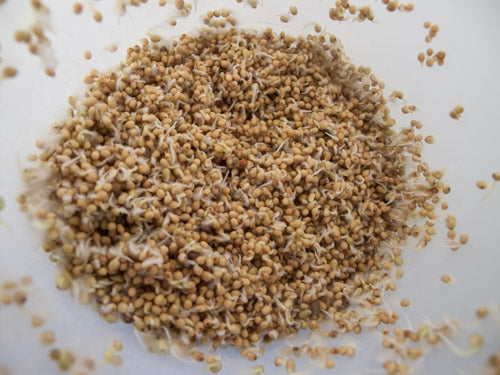
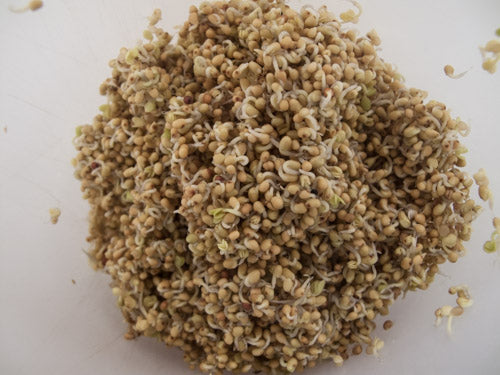
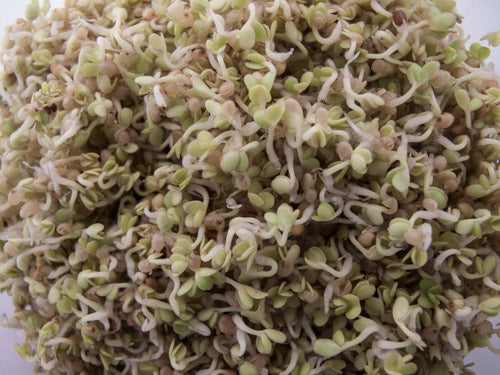
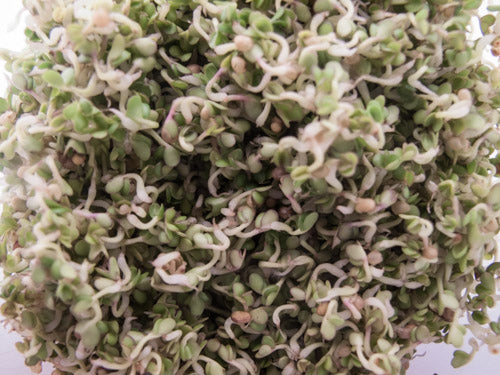
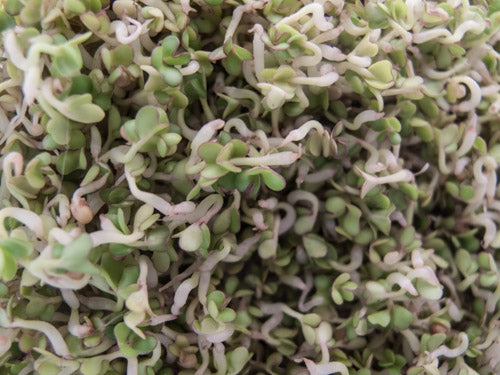
12 hours later...
At this point I like to remove some hulls. It will make it easier to Drain thoroughly. To do this I fill my sprouter with water and use a fork to reach down and loosen the sprouts so that they move freely. Hulls (the coat of the seed) will float to the top. I guide them over into a group and scoop them out with my fingers. I do this - moving the sprouts and collecting the hulls - several times, until I am satisfied that I've gotten most of them, then I Drain thoroughly.
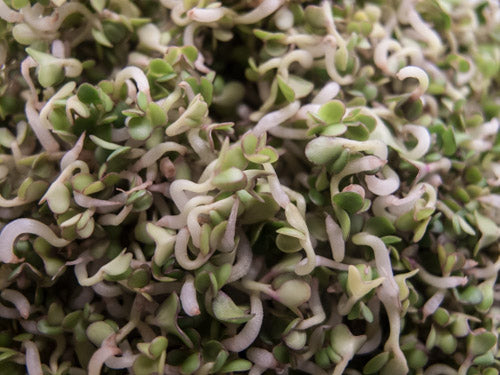
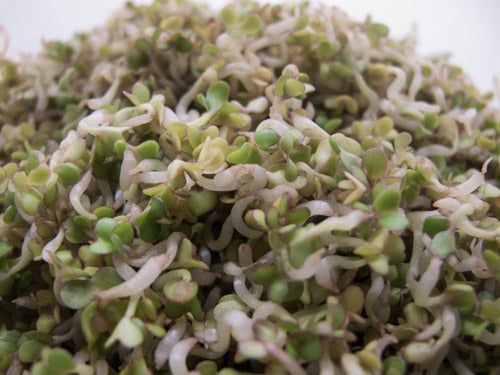
12 hours later...
Harvesting Brassicas requires one additional step; De-Hulling. I spent enough time removing hulls a day ago that de-hulling now will take little effort and time, but it is a virtual necessity if you want to store your crop for more than a few days. The hulls of Brassica sprouts are quite thick and are very moist, so removing them is key to getting shelf life from the finished crop. We have photos and a video on our De-Hulling page.
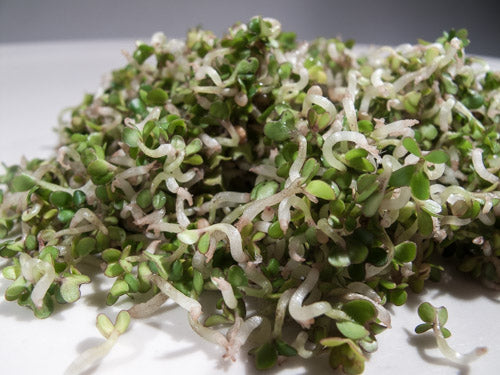
Great job sprout farmer!
Oriental Mustard seed is one of very few non-mucilaginous mustard seeds. It is because it is not mucilaginous that it can be grown as a sprout. It can Also be grown as a Microgreen. A mucilaginous mustard seed Must be grown as a Microgreen. That's a big part of why Oriental Mustard is such a great seed - you have options =:-)
3 Tablespoons are now in one of our Easy Sprout Sprouters awaiting Soaking.
6-12 hours later (it really doesn't matter)...
Our Oriental Mustard has now Soaked up its fill of water. FYI - you are now working with living things. Once a seed has soaked up its fill of water it is alive. Having moved from its dry/dormant state you can actually eat them now and enjoy the nutritional benefits their life force offers. I suggest waiting. They are going to be even better in a few days. Now, Rinse and Drain very thoroughly.
12 hours later...
By now you will be seeing plenty of germination and very likely root hairs which grow off the main (tap) root. They are microscopic roots! They are NOT mold!
They will collapse back against the tap roots after you Rinse, and will only reappear when the sprouts are at their driest - just before you Rinse again - so expect to see more in 12 hours. They are amazing. If you have a magnifying glass try to get a close-up look at them. Again, Rinse and Drain very thoroughly.
12 hours later...
At this point I like to remove some hulls. It will make it easier to Drain thoroughly. To do this I fill my sprouter with water and use a fork to reach down and loosen the sprouts so that they move freely. Hulls (the coat of the seed) will float to the top. I guide them over into a group and scoop them out with my fingers. I do this - moving the sprouts and collecting the hulls - several times, until I am satisfied that I've gotten most of them, then I Drain thoroughly.
12 hours later...
Harvesting Brassicas requires one additional step; De-Hulling. I spent enough time removing hulls a day ago that de-hulling now will take little effort and time, but it is a virtual necessity if you want to store your crop for more than a few days. The hulls of Brassica sprouts are quite thick and are very moist, so removing them is key to getting shelf life from the finished crop. We have photos and a video on our De-Hulling page.
Great job sprout farmer!
Yields approximately 4 Cups (1/2 lb.) of Sprouts
Seed Prep
Measure out 3 Tablespoons of seed* (slightly heaping) into your Sprouter or a strainer.
Rinse your seeds to remove dust and debris.
Soak
Transfer your seeds into your Sprouter (if necessary), or to a bowl.
Mix seeds up as you slowly add water to assure even water contact for all.
Add 2-3 times as much cool (70-80°F) water. Allow seeds to Soak for 4-12 hours.
Do Not Ever Soak Again. Soaking is done only this one time.
We start counting days at this point - when the Soak is done (post-Soak is the phrase we use).
A crop of Brassica Sprouts usually takes 5 days - from This point in time to harvest.
Sprouting
Empty the seeds into your Sprouter (if necessary).
Drain off the soak water.
You can use it - it has nutrients in it. We use it on house plants.
Rinse thoroughly with cool (70-80°F) water.
Drain thoroughly.
Draining Thoroughly (Maniacally even) is the key to great crops. The smaller the seed (all Brassica Sprouts are small seeds) the more thorough you must be. Do Not skimp on Rinsing - but focus seriously on Draining.
If you need to see what we mean by Thorough Draining - check out our videos.
Set your Sprouter anywhere out of direct sunlight and at room temperature (70° is optimal) between Rinses.
This is where your sprouts do their growing. We use a counter top - in the corner of our kitchen, near the sink. Indirect sunlight is fine, as is your regular room light - because light just does not matter much in the first couple days.
A plant can only perform photosynthesis when it has leaves. Until a plant has leaves, light has little if any effect. Sprouts also happen to like air- circulation, so don't hide your sprouts. When leaves do appear, this will be plenty of light for them to green up. You can of course use Grow Lights if you like.
Rinse and Drain again every 8-12 hours for 3 days.
Ther will be more days - but we'll address them when we get there.
Always be sure to Drain very thoroughly. The most common cause of inferior sprouts is inadequate drainage. Even the best designed Sprouting Device holds water, and Brassicas are particularly needy - especially the first couple days - so pay special attention to this step.
Greening
On the 4th day (post soak) relocate your sprouts, if necessary.
If you've been keeping them away from light - move them. Avoid direct sun as it can cook your sprouts, unless you are growing in a Tray Sprouter - in which case direct sunlight is great. Indirect sunlight is best for non-tray Sprouters but grow lights work well too. Experiment - you will be amazed at how little light sprouts require to green up. Photosynthesis is a marvel!
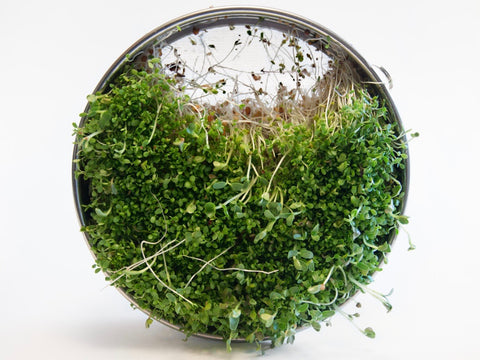
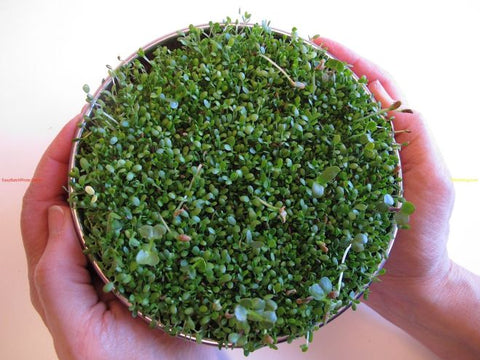
The center of the crop - when grown in a Jar, Easy Sprout, or other non-tray Sprouter, will remain yellow leaved. We've never minded that, but if you want - you can move your crop around - - likely removing it to a large bowl or pot and then returning it to your Sprouter. Do this as often as you like - or (like us) not at all. Grow vertically in a Tray if this is a real concern for you. We imagine everyone who visits us eats plenty of greens, so chlorophyll isn't something we're short of. As always - do as you wish.
Continue to Rinse and Drain thoroughly every 8-12 hours.
Your last Rinse and Drain will be on day 5 - or possibly day 6 (post Soak).
Always Drain Thoroughly.
Finishing
Your sprouts will be done about the end of day 5.
The majority of sprouts will have open leaves which will be green. You'll recognize them.
De-Hulling
Hulls are the thin coat on a seed. In most cases they seperate themselves from the sprout. They are only a problem when it comes to the shelf life of your finished crop. We've eaten them for years and consider them extra roughage, but the crop looks better and lasts longer without them - so removing them is good. Really, in the case of Brassicas - we suggest you do it. Their hulls are thicker than most seeds, and so reduce the shelf-life of the crop more dramatically.
You may De-Hull your sprouts at any time during day 5.
If you have a Salad Spinner - De-Hulling can be your last step. You can harvest and refrigerate them immediately after you finish.
You can also remove hulls prior to harvest...
If you are growing in a Jar - using the Coarse Mesh Screen will allow some hulls to float out through the screen while Rinsing. Repeating and agitating your sprouts will allow more hulls to escape.
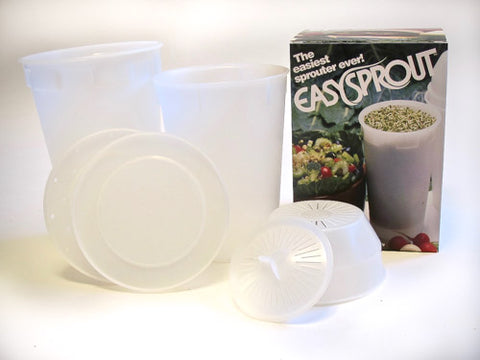
If you're growing in an Easy Sprout Sprouter - transfer your sprouts to the Solid Base, fill with water, and agitate with a fork. This will help hulls get to the surface - where you can skim them off. When you've gotten all you can - move your sprouts back to the Growing Vessel, Rinse again, and Drain Thoroughly.
If you're growing in our Stainless Steel Sprouter you can get rid of most of the hulls by Rinsing Upside Down. Instead of writing words - let us direct you to our short video on the subject - which works well for Brassicas too: Rinsing Leafy Sprouts Upside Down.
Here is our video on De-Hulling.
Harvest
If you Dehulled with a salad spinner - you can go right to refrigeration. If not... Your sprouts are done 8-12 hours after your final Rinse and Very Thorough Draining. If we minimize the surface moisture of our sprouts they store much better in refrigeration, so we let them sit for 8-12 hours after that final - Thoroughly Maniacal Draining.
Storing Your Crop
Transfer your sprout crop to a plastic bag or the sealed container of your choice. If you want extra special bags, we have Produce Storage Bags that can extend shelf life substantially.
Brassica Sprouts are best within a week of harvest, but we've had some crops last for a month in the fridge.
Great work sprout farmer!
*Amount of Seed to Use
* If using Sproutpeople's Single Harvest Pack - use the whole bag (for a one-quart Sprouter). It will produce a crop of approximately 8 ounces.
These seeds yield approximately 4.5:1 - which means the sprouts will weigh 41⁄2 times as much as the seed you start with, but, they will increase even more in volume - so don't start with more than 3 (heaping) Tablespoons per quart/litre of sprouter capacity.
A wonderful tender sprout, this Mustard tastes like Horseradish - Mmmmm! This is Oriental Mustard - it is a yellow seed and is the only non-muciloginous Mustard we've ever seen and therefore the only (non-Asian) Mustard you can sprout in a conventional sprouter. This is one of the more difficult sprouts to grow, but the flavor is so fantastic that we consider it worth the extra work. Oriental Mustard is hard to find as very few farmers grow it. We have gone years without it more than once, so get it while you can. Our current crop is something of a miracle in fact. Early snow in Saskatchewan this past fall buried a beautiful crop of Oriental Mustard. The miracle is that there was a freak warm spell in November (amazing!) that lasted long enough (amazing!) for the seed to get harvested. Beyond that, the moisture did not damage the seed. That is truly amazing.
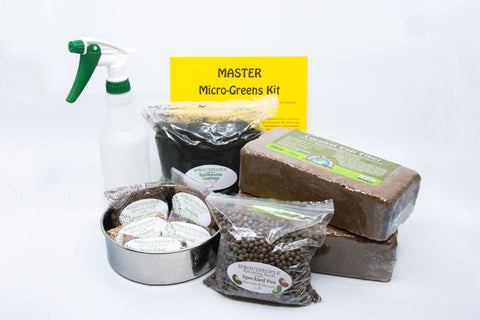
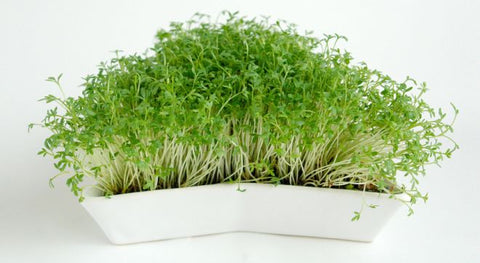
You can also grow Oriental Mustard as a Micro-Green.
Note: Canadian and US researchers have found that Brassicas contain antioxidants such as sulfurophane. Mustard is a Brassica.
Another wonderful Lot of our favorite Mustard. A very prolific seed this!
Seed Shelf Life: 5 years. Store in cool, dark, dry spot. Store in freezer to extend shelf life.
Recommended Sprouters for Mustard Sprouts
I like to barely sprout my mustard seeds then make mustard with them. Adds a bit of a green taste but very tasty and healthy when made with unfiltered, organic ACV!!
I like to barely sprout my mustard seeds then make mustard with them. Adds a bit of a green taste but very tasty and healthy when made with unfiltered, organic ACV!!
I accidentally tipped over my bamboo sprouting basket and dropped about a cup of these sprouted beauties on the floor. My little terrier mix named Oscar raced in and began quickly devouring them. He absolutely LOVED these sprouts!
I also REALLY like them and find that not only are they very attractive once they show leaves, but they have a nice spicy kick and would work very well with bland flavors in your meal.
I accidentally tipped over my bamboo sprouting basket and dropped about a cup of these sprouted beauties on the floor. My little terrier mix named Oscar raced in and began quickly devouring them. He absolutely LOVED these sprouts!
I also REALLY like them and find that not only are they very attractive once they show leaves, but they have a nice spicy kick and would work very well with bland flavors in your meal.