Celery Micro-Greens
A profoundly tiny seed, Celery grows a tiny Micro-Green. Tastes like celery, but even more so. Really delicious!. It is the slowest seed we've worked with in our lives, but the plant it grows is adorable.
Note: We sell Celery by the 1/2 pound.
Vitamins A, B, C, and E
Calcium, Iron, Magnesium, Phosphorus, Potassium, Zinc
Chlorophyll, Amino Acids
Antioxidants
Protein: 20%
Celeryee, tender tiny greens.
The time it takes to grow a finished 14 - 21 days, or other crop (Micro-Greens, Grass, Greens) from a dry Seed. Note: This "finished" Sprout is our preference. you may grow them for as long as you want! In fact, we suggest that you taste them at every rinse to discover when you like them best.
How to Grow Celery Micro-Greens
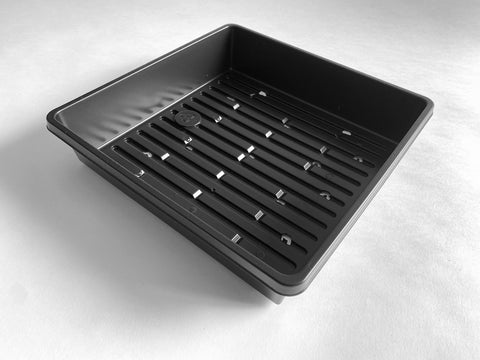
Plant 1-2 teaspoons of seed (for a 5x5 inch Tray) on thoroughly moistened medium.
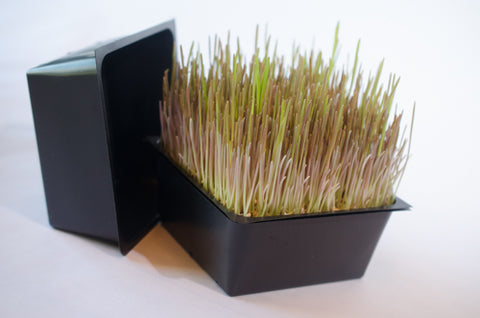
Cover your crop with another tray, or a plate - to keep light out and moisture in.
Keep your medium moist by watering lightly as needed. Don't drench!
Use Coconut Coir and you likely won't have to water at all after planting!
When your plants have begun to show leaves, remove cover and move your crop to a well lit location.
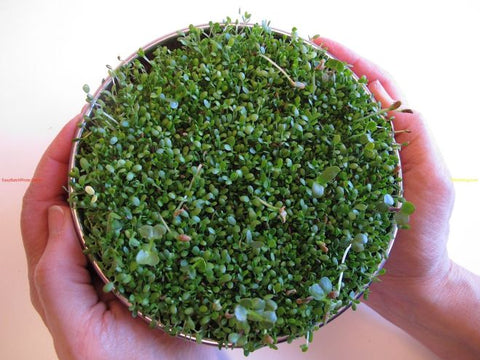
Harvest when the leaves are open and an inch or three tall (day 21-28).
Cut just above the medium, with a scissors or sharp knife.
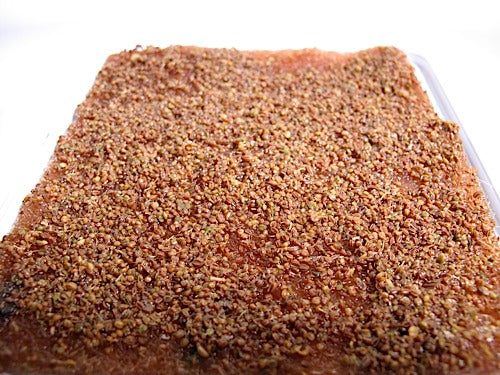
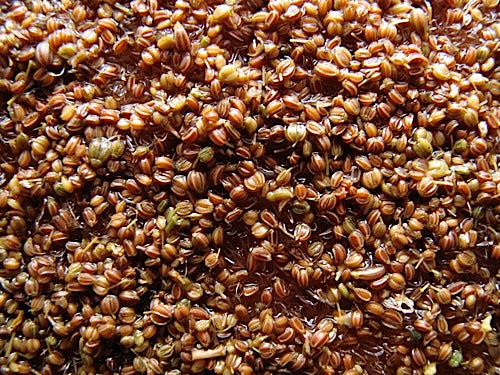
Celery spread atop the thoroughly moistened medium of our choosing - Baby Blanket in this instance.
The Celery is going to look just like this for 1-2 weeks. This is a very slow germinating seed, so be patient - and follow our instructions.
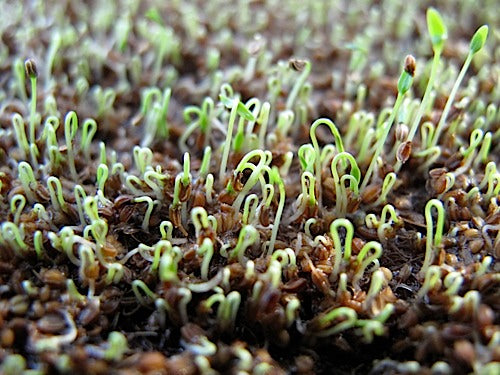
Even now, you have to look closely to see what little germination has taken place.
This could be what you see on day 7, but it is likely that it will be longer. Don't give up!
You will be so excited when you see growth, you won't care what day it is. Getting Celery to grow is a real accomplishment!
Don't expect to see this until 10 - 14 days have passed.
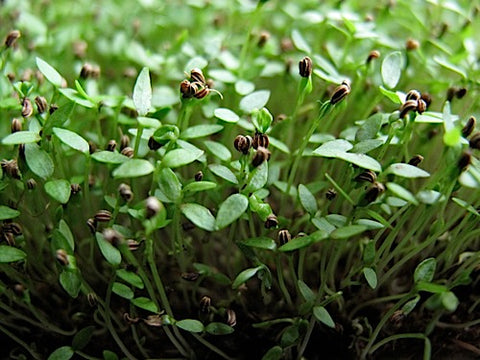
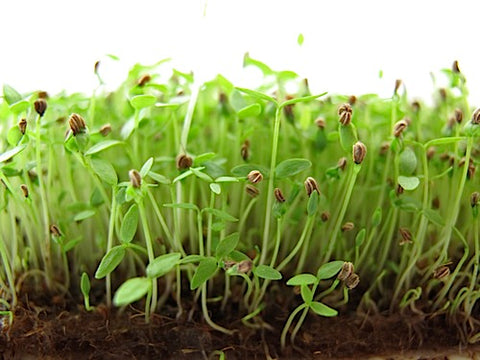
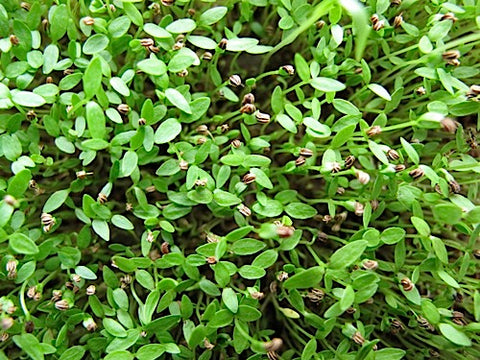
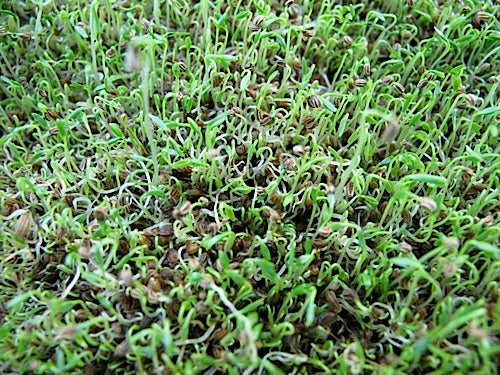
If all is going according to plan, you will see something like this, sometime around 2 - 2 1/2 weeks after you planted.
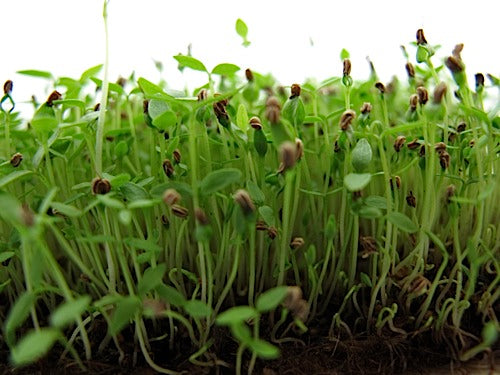
Harvest time is somewhere around day 21 - or later.
Celery spread atop the thoroughly moistened medium of our choosing - Baby Blanket in this instance.
The Celery is going to look just like this for 1-2 weeks. This is a very slow germinating seed, so be patient - and follow our instructions.
Even now, you have to look closely to see what little germination has taken place.
This could be what you see on day 7, but it is likely that it will be longer. Don't give up!
You will be so excited when you see growth, you won't care what day it is. Getting Celery to grow is a real accomplishment!
Don't expect to see this until 10 - 14 days have passed.
If all is going according to plan, you will see something like this, sometime around 2 - 2 1/2 weeks after you planted.
Harvest time is somewhere around day 21 - or later.
Yields approximately 4 Cups (1/2 lb.) of Sprouts
Seed Prep
Measure out 2 Tablespoons of seed* (slightly heaping) into your Sprouter or a strainer.
Rinse your seeds to remove dust and debris.
Soak
Transfer your seeds into your Sprouter (if necessary), or to a bowl.
Mix seeds up as you slowly add water to assure even water contact for all.
Add 2-3 times as much cool (70-80°F) water.
Allow seeds to Soak for 4-12 hours.
Do Not Ever Soak Again. Soaking is done only this one time.
We start counting days at this point - when the Soak is done (post-Soak is the phrase we use).
A crop of Leafy Sprouts usually takes 6 days - from This point in time to harvest.
Sprouting
Empty the seeds into your Sprouter (if necessary).
Drain off the soak water.
You can use it - it has nutrients in it. We use it on house plants.
Rinse thoroughly with cool (70-80°F) water.
Drain thoroughly.
Draining Thoroughly (Maniacally even) is the key to great crops. The smaller the seed (all Leafy Sprouts are small seeds) the more thorough you must be. Do Not skimp on Rinsing - but focus seriously on Draining.
If you need to see what we mean by Thorough Draining - check out our videos.
Set your Sprouter anywhere out of direct sunlight and at room temperature (70° is optimal) between Rinses.
This is where your sprouts do their growing. We use a counter top - in the corner of our kitchen, where the sprouter won't get knocked over by cats, dogs, kids or us. Indirect sunlight is fine, as is your regular room light - because light just does not matter much in the first couple days.
A plant can only perform photosynthesis when it has leaves. Until a plant has leaves, light has little if any effect. Sprouts also happen to like air-circulation, so don't hide your sprouts. When leaves do appear, this will be plenty of light for them to green up. You can also use Grow Lights if you like.
Rinse and Drain again every 8-12 hours for 3 days.
Always be sure to Drain very thoroughly. The most common cause of inferior sprouts is inadequate drainage. Even the best designed Sprouting Device holds water, so pay special attention to this step.
Greening
On the 4th day (post soak) relocate your sprouts, if necessary.
If you've been keeping them away from light - move them. Avoid direct sun as it can cook your sprouts, unless you are growing in a Tray Sprouter - in which case direct sunlight is great. Indirect sunlight is best for non-tray Sprouters but grow lights work well too. Experiment - you will be amazed at how little light sprouts require to green up. Photosynthesis is a marvel!
Continue to Rinse and Drain thoroughly every 8-12 hours.
Your last Rinse and Drain will be either at the end of day 5 or the start of day 6.
Always Drain Thoroughly.
Finishing
Your sprouts will be done about the end of day 6.
The majority of sprouts will have open leaves which will be green. You'll recognize them.
De-Hulling
Hulls are the thin coat on a seed. In most cases they separate themselves from the sprout. They are only a problem when it comes to the shelf life of your finished crop. We've eaten them for years and consider them extra roughage, but the crop looks better and lasts longer without them - so removing them is good.
You may De-Hull your sprouts at any time during day 5 or 6.
If you have a Salad Spinner - De-Hulling can be your last step. You can harvest and refrigerate them immediately after you finish.
You can also remove hulls prior to harvest...
If you are growing in a Jar - using the Coarse Mesh Screen will allow some hulls to float out through the screen while Rinsing. Repeating and agitating your sprouts will allow more hulls to escape.
If you're growing in an Easy Sprout Sprouter - transfer your sprouts to the Solid Base, fill with water, and agitate with a fork. This will help hulls get to the surface - where you can skim them off. When you've gotten all you can - move your sprouts back to the Growing Vessel, Rinse again, and Drain Thoroughly.
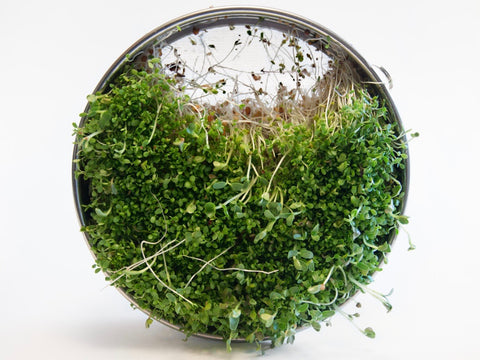
If you're growing in our Stainless Steel Sprouter you can get rid of most of the hulls by Rinsing Upside Down. Instead of writing words - let us direct you to our short video on the subject: Rinsing Leafy Sprouts Upside Down
Here is our video on De-Hulling.
Harvest
If you De-hulled with a salad spinner - you can go right to refrigeration. If not... Your sprouts are done 8-12 hours after your final Rinse and Very Thorough Draining. If we minimize the surface moisture of our sprouts they store much better in refrigeration, so we let them sit for 8-12 hours after that final Maniacal Draining.
Storing Your Crop
Transfer your sprout crop to a plastic bag or the sealed container of your choice. We have Produce Storage Bags that can extend shelf life substantially.
Leafy Sprouts are best within a week of harvest, but we've had some crops last for over a month in the fridge.
Great work sprout farmer!
*Amount of Seed to Use
* If using Sproutpeople's Single Harvest Pack - use the whole bag (for a one-quart Sprouter). It will produce a crop of approximately 8 ounces.
These seeds yield approximately 7:1 - which means the sprouts will weigh 7 times as much as the seed you start with, but, they will increase even more in volume - so don't start with more than 2 (heaping) Tablespoons per quart/litre of sprouter capacity.
Customers have asked us for years if we would sell straight Celery. We have adored it for many years as an ingredient in our Nick's Hot Sprout Salad. Mixing up a batch of Nick's is always a joy. The Celery is so aromatic that it makes the whole place smell fantastic. Celery seed is hard to come by in quantities, and it is difficult to sprout alone, so we refrained from offering it. But, we discovered that it grows well, albeit slowly as a Micro-Green, so we decided to let folks who want it, have it. Tastes like celery, but even more so. Really delicious!. Seed supply is still problematic, but we think we can maintain availability, so here's your chance to try growing Celery Micro-Greens.
As we say elsewhere on this page, and others; Celery is a very slow crop, so be patient. It has other unique characteristics - like its amazing tinyness. Read our Instructions and our Notes (below the instructions) so that you get the most from this unusual seed.
This years celery may be even slower germinating than last years. it’s hard to believe as celery is always slow - but it seems the case. You have to be very patient and persistent to get it to grow.
Seed Shelf Life: 1-2 years. Store in cool, dark, dry spot. Store in freezer to extend shelf life.